


🍞 16 Pints of Zucchini Bread
A Classic Recipe – With a Critical Safety Warning
📌 In This Article
🍞 The Zucchini Bread Story
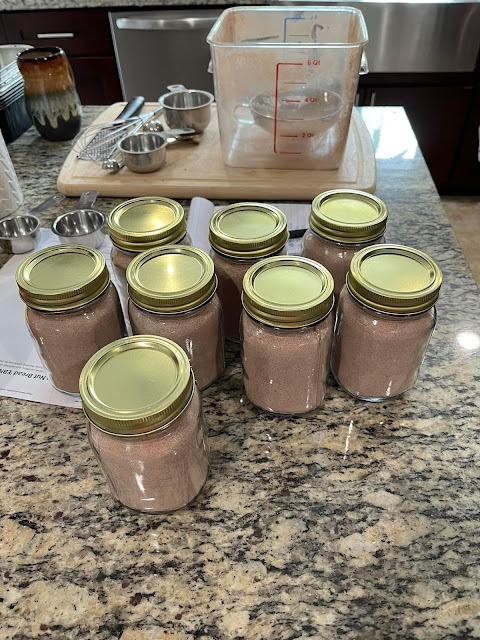
"16 pints of zucchini bread finished today." 🍞✨
Baking zucchini bread in canning jars is a classic method that has been passed down through generations. It creates perfectly portioned, moist loaves that are ideal for gifting or storing. The process is straightforward: you bake the batter directly in jars, then seal them as they come out of the oven to create a vacuum seal [citation:2][citation:7].
However, this practice is not without its controversies. Food safety experts warn that this method can create conditions for the growth of Clostridium botulinum, the bacteria that causes botulism [citation:1][citation:3].
💬 A note on safety: "It has been brought to my attention that this procedure may be unsafe. While myself and others have been doing this safely for 20+ years, you will have to decide personally whether or not to try it. I was simply sharing what I had done yesterday."
⚠️ Critical Safety Warning
⚠️ READ THIS BEFORE PROCEEDING
This method is NOT recommended by food safety authorities and carries a risk of botulism.
The USDA, Penn State Extension, Utah State University, and other food safety organizations strongly advise against this practice [citation:1][citation:3][citation:8].
The Science Behind the Risk:
- Botulism spores can survive baking: Research shows that C. botulinum spores can survive the baking process [citation:1][citation:10].
- Ideal conditions for growth: Sealing the jar creates an anaerobic (oxygen-free) environment. The bread has a low-acid pH (above 4.6) and high moisture – the perfect conditions for botulism toxin to form [citation:1][citation:3][citation:8].
- This is "oven canning," not true canning: It does not reach the temperatures required to destroy botulism spores, which require a pressure canner for safety [citation:3][citation:8].
- No safe recipe exists: Research at Utah State University was unable to formulate a safe recipe for canned quick breads [citation:1][citation:10].
If you choose to use this method, you do so at your own risk. The only safe way to store quick breads is to freeze them or refrigerate them. [citation:1][citation:8]
📦 Ingredients – For 16 Pints
Classic Zucchini Bread Batter
- 🍬 6 cups granulated sugar
- 🥄 3 cups vegetable oil
- 🥚 12 large eggs
- 🌾 8 cups all-purpose flour
- 🌿 4½ tablespoons ground cinnamon
- 🧂 4 teaspoons baking soda
- 🧂 2 teaspoons salt
- 🌿 1 teaspoon baking powder
- 🥒 6 cups finely shredded zucchini
- 🌰 3 cups chopped walnuts – optional
- 🌿 3 teaspoons vanilla extract
- 🍇 2 cups raisins – optional
Equipment
- 🥫 16 wide-mouth pint jars – with lids and rings
- 🧈 Shortening – for greasing jars
- 🔥 Oven – preheated to 325°F
💡 Pro tip: "Wash jars and new, unused lids and rings in warm soapy water, then dry and grease with shortening." [citation:2]
📝 Step-by-Step Instructions
Step 1 – Prepare the Jars
- Inspect pint-sized jars for cracks and rings for rust [citation:2].
- Wash jars, lids, and rings in warm soapy water.
- Dry thoroughly and grease the inside of each jar with shortening [citation:2][citation:7].
- Place greased jars on a rimmed baking sheet.
💡 Pro Tip
Greasing the jars ensures the bread releases easily after baking.
Step 2 – Make the Batter
- If using raisins, soak them in hot water until plump, about 10 minutes. Drain [citation:2].
- In a large bowl, beat sugar, oil, and eggs with an electric mixer until creamy [citation:7].
- Beat in raisins (if using).
- In a separate bowl, combine flour, cinnamon, baking soda, salt, and baking powder.
- Add the dry ingredients to the wet mixture and beat until blended.
- Fold in zucchini, walnuts (if using), and vanilla extract [citation:2].
Step 3 – Fill the Jars
- Pour batter into the prepared jars, filling each ⅔ full [citation:2][citation:7].
- Do not overfill – the bread needs room to rise.
⚠️ Important: "Filling jars 2/3 full is critical – overfilled jars can cause the bread to spill over during baking."
Step 4 – Bake
- Bake at 325°F for 55-60 minutes, or until a toothpick inserted into the center comes out clean [citation:2][citation:7].
- Turn off the oven and let the jars sit inside for a few minutes.
Step 5 – Seal the Jars
- Remove one jar at a time from the oven using oven mitts [citation:2].
- Trim off any excess bread from the top so the lid will seal properly.
- Wipe the rims clean with a damp cloth.
- Place a hot lid on the jar and screw on the ring until fingertip-tight [citation:2].
- Place jars several inches apart on a cloth-covered or wood surface and let cool completely [citation:2].
💡 Pro tip: "The bread should create a vacuum seal as it cools. You'll hear the lids 'ping' as they seal."
🥫 Storage Guidelines
How to Store Your Zucchini Bread
⚠️ Critical: "Breads and cakes in jars should be refrigerated or frozen immediately. Do not store at room temperature for extended periods." [citation:1][citation:8]
- 🧊 Refrigerator: Store sealed jars in the refrigerator for up to 2-3 weeks [citation:2].
- ❄️ Freezer: Freeze for up to 3 months for longer storage [citation:14].
- 🏠 Room Temperature: Only if you plan to consume within 2-3 days [citation:14].
- 🔍 Inspect before eating: Check for bulging lids, off odors, or mold. Discard if any signs of spoilage are present.
💡 Pro tip: "For the best quality and safety, freeze your zucchini bread rather than storing it at room temperature." [citation:1]
❓ Frequently Asked Questions
❓ Is this really unsafe?
Food safety experts at the USDA, Penn State Extension, and Utah State University strongly advise against this practice due to the risk of botulism [citation:1][citation:3].
❓ Why do people still do it?
It's a traditional method that has been used for decades. Some people have been doing it for 20+ years without incident. However, the risk is real and well-documented [citation:1][citation:6].
❓ What exactly is the risk?
Botulism spores can survive the baking process and grow in the sealed jar, producing a deadly toxin. The bread provides the perfect environment: low-acid, moist, and oxygen-free [citation:1][citation:3][citation:8].
❓ Can I water bath can this?
No – water bath canning is for high-acid foods. This method is "oven canning," which is not a true canning method and does not reach the temperatures needed to destroy botulism spores [citation:8].
❓ What if I use a pressure canner?
There are no tested recipes for pressure canning breads. The high heat would likely ruin the texture and flavor [citation:8].
❓ What are signs of spoilage?
Bulging lids, leaks, off odors, or mold [citation:14].
❓ What's the safe alternative?
Freeze or refrigerate your bread. You can also bake it in regular loaf pans and freeze individual slices [citation:1].
❓ Can I use this recipe for other breads?
The Allrecipes version notes you can use this technique for any bread as long as it does not contain dairy products [citation:2].
❓ Can I give these as gifts?
If you choose to gift them, be sure to inform the recipient that they must be refrigerated or frozen immediately and consumed within a short time [citation:1].
❓ What if I've already made them?
Refrigerate or freeze them immediately. Consume within 2-3 weeks for refrigerated jars. If you notice any signs of spoilage, discard the entire jar [citation:1].
📄 Printable Recipe Card
╔═══════════════════════════════════════════════════════════════════════╗
║              ZUCCHINI BREAD IN A JAR                                 ║
║         Classic Recipe – With a Critical Safety Warning             ║
╚═══════════════════════════════════════════════════════════════════════╝

YIELD: 16 pints | BAKING TIME: 55-60 min at 325°F

INGREDIENTS:
- 6 cups sugar
- 3 cups vegetable oil
- 12 large eggs
- 8 cups all-purpose flour
- 4½ Tbsp cinnamon
- 4 tsp baking soda
- 2 tsp salt
- 1 tsp baking powder
- 6 cups finely shredded zucchini
- 3 cups chopped walnuts (optional)
- 3 tsp vanilla extract
- 2 cups raisins (optional)

INSTRUCTIONS:
1. Grease 16 wide-mouth pint jars with shortening.
2. Beat sugar, oil, and eggs until creamy.
3. Add dry ingredients and mix until blended.
4. Fold in zucchini, walnuts, and vanilla.
5. Fill jars ⅔ full with batter.
6. Bake at 325°F for 55-60 minutes.
7. Remove jars one at a time. Trim excess bread.
8. Wipe rims, apply lids (fingertip-tight).
9. Cool completely. Lids should seal as they cool.

⚠️ CRITICAL SAFETY WARNING:
This method is NOT recommended by food safety experts.
Risk of botulism. Refrigerate or freeze immediately.
Do not store at room temperature.

STORAGE: 2-3 weeks refrigerated, or 3 months frozen.

"While myself and others have been doing this safely for 20+ years, you will have to decide personally whether or not to try it." 🍞✨
© CanningRebels — Zucchini Bread in a Jar | The Great Canning Debate








Comments